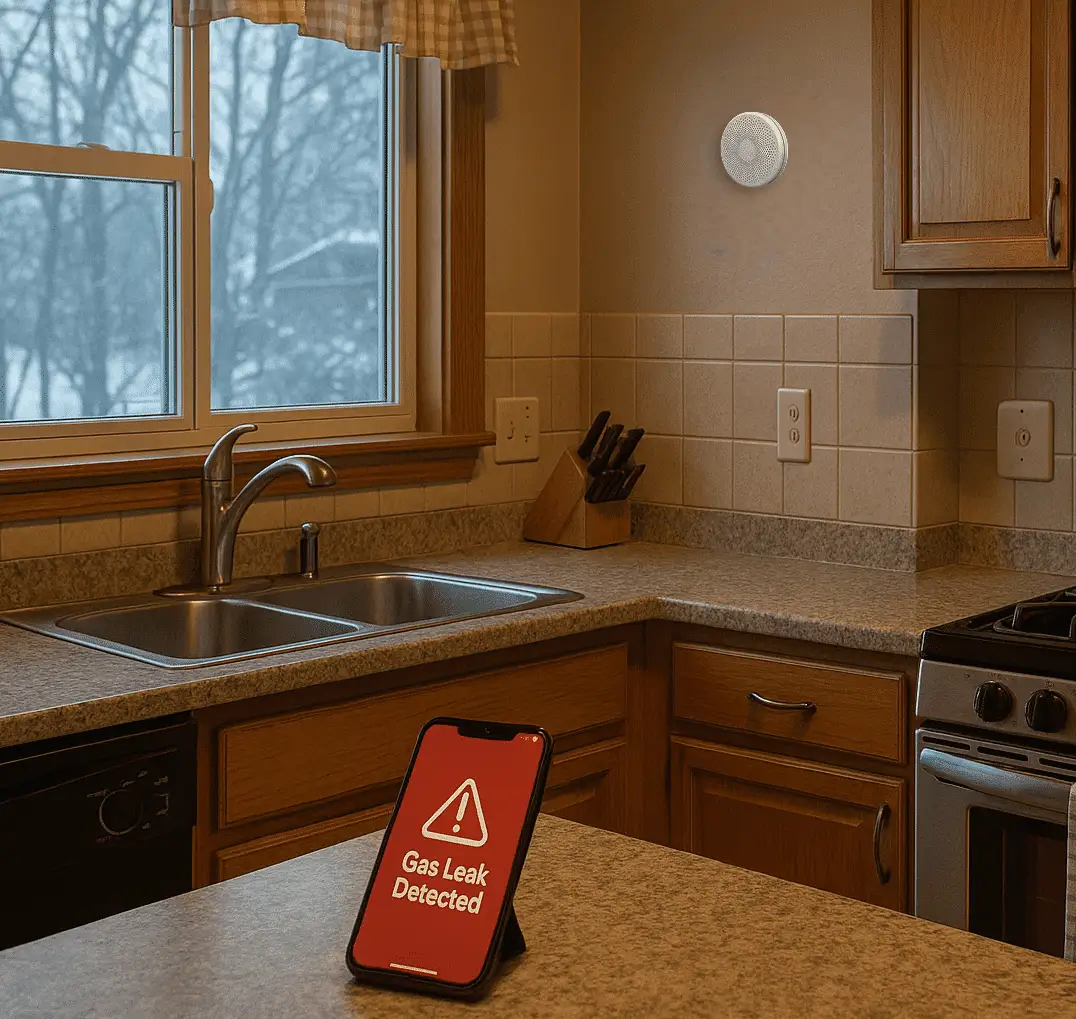
It’s a quiet winter evening. You’re making dinner when your phone buzzes — “Gas leak detected near your kitchen stove.”
Before you even smell anything unusual, the app on your phone has already warned you.
That’s what a WiFi gas leak detector does: it gives your home a voice that can reach you anywhere.
In 2025, smart gas alarms are no longer luxury gadgets. They’ve become an essential layer of protection for any home that uses natural gas, propane, or LPG. Let’s explore how they work, what makes them different, and which models deserve your attention this year.
Why Smart WiFi Gas Detectors Matter
Traditional gas detectors are simple — they beep loudly when they sense gas. But what if nobody’s home to hear them?
WiFi-enabled gas detectors add a vital upgrade: instant smartphone alerts.
They connect to your home WiFi network and send push notifications when gas concentration rises above safe limits. That means you’ll know about a problem whether you’re in the backyard, at work, or even on vacation.
💡 Real-World Scenarios
- Cooking safety: You forget to turn off the stove before rushing out. Within minutes, your phone receives a “gas detected” alert.
- Basement heating: Your furnace develops a small leak overnight — your detector wakes you up before anyone feels dizzy.
- Rental apartment: Tenants leave a gas heater running. You, as the owner, receive an alert through the app and can check remotely.
Smart detectors aren’t just alarms — they’re 24/7 guardians for your home.
How WiFi Gas Leak Detectors Work
Built-in Sensors That Detect Gas in Seconds
Most smart gas detectors use either semiconductor or catalytic sensors to recognize even tiny changes in air composition. These technologies are explained in more detail in how gas leak alarms work, but in short, they can detect gases like methane, propane, or carbon monoxide long before danger levels are reached.
Once connected to your WiFi, the detector syncs with an app (such as Tuya Smart or Smart Life) and shows real-time readings, alarm history, and even ambient temperature. You can silence false alarms or run diagnostics directly from your phone — no climbing on chairs to press buttons.
When gas is detected, you receive a push notification and an in-app alert. In some smart homes, the system can automatically trigger linked devices, like shutoff valves, to stop the source before the situation escalates.
Top 3 WiFi Gas Leak Detectors in 2025 (Compared)
| Model | Gas Types | Connectivity | Key Features | Ideal Use |
|---|---|---|---|---|
| Grus GasNet-S4 | Natural Gas / LPG | WiFi (Tuya App) | Real-time alerts, high-sensitivity semiconductor sensor, wall-mounted design | Kitchens & apartments |
| Grus GasNet-CM | CO + Gas | WiFi | Dual-sensor protection, 85 dB siren, smart app control | Basements, garages, or near furnaces |
| Generic Model X | Methane | WiFi | Basic alerts, limited app features, plug-in style | Small kitchens, low-budget use |
🏡 Real-Life Comparison
If your home has a gas stove and water heater, the GasNet-S4 gives fast response and reliable WiFi stability.
If you’re using a fireplace or furnace, the dual-sensor GasNet-CM covers both gas and CO — a perfect fit for winter protection.
Budget models can work for small apartments, but they often lack accurate readings and long-term reliability.
Choosing the Right Smart Gas Detector for Your Home
1. Know the Gas You Use
Different gases behave differently.
Natural gas (methane) rises — so mount your detector near the ceiling.
Propane and LPG sink — so place detectors lower, close to the floor or near the appliance.
2. Check App Compatibility
Choose models that support Tuya Smart, Smart Life, Alexa, or Google Home. Learn more about setting up your smart gas detector app for remote alerts and device integration.
3. Think About Where to Install
For complete coverage, install:
- One detector near your stove or oven
- One near your water heater
- One in the basement near your furnace or gas dryer
Avoid placing detectors directly above the stove — keep a small distance to reduce false alarms.
For fireplace users, see these fireplace safety tips to reduce carbon monoxide buildup..
WiFi Gas Detectors That Work with Smart Valves
One of the biggest advantages of WiFi gas detectors is automation. When paired with a smart shutoff valve, the system can take immediate action.
Imagine this:
You’re away for the weekend. Your gas detector senses a leak near the stove and sends an alert.
Instantly, the linked smart valve shuts off the main gas supply. You open your phone and see: “Gas flow stopped — safety restored.”
This isn’t science fiction — it’s smart safety in action.
By connecting your detectors with a central app, you create a full-home protection system that reacts automatically.
Real Home Setup Example
- Kitchen: One GasNet-S4 above the cooking range.
- Basement: One GasNet-CM near the furnace.
- Garage: Optional extra unit for fuel storage safety.
- App Setup: All devices linked to the same Tuya account, showing real-time status on one dashboard.
- Automation: Detectors trigger the shutoff valve if any alarm goes off.
This setup covers the most common risk zones in North American homes and provides peace of mind 24/7.
Final Thoughts — Stay Safe, Wherever You Are
A few seconds can make the difference between a warning and a tragedy.
Smart WiFi gas leak detectors give you those precious seconds — and the confidence that your home is always being watched over.
Whether you’re cooking, sleeping, or away for the holidays, your detectors stay online, ready to alert you at the first sign of danger.
Safety isn’t just about alarms. It’s about awareness — powered by smart technology.
Protect your home from both gas and carbon monoxide leaks with our dual smart detector set. Enjoy up to 10% off for a limited time — peace of mind has never been this affordable.
Shop the Black Friday Bundle →
Comments
Post a Comment