Introduction: Why Smart Water Leak Detection Matters in 2025
Imagine this: You’re on vacation, sipping a cold drink by the beach, while back home a burst pipe is quietly flooding your basement. According to the Insurance Information Institute, water damage and freezing account for nearly 29% of all home insurance claims in the U.S. That’s billions in property damage each year.

But here’s the good news—smart water leak detectors have evolved tremendously in 2025. With real-time alerts, WiFi connectivity, and integration with home automation platforms, they don’t just warn you—they can take action. Whether that means shutting off your water automatically or notifying your phone when moisture is detected under your kitchen sink, the right device can save you thousands.
So which is the best smart water leak detector in 2025? How do you choose between a battery-powered sensor and a smart shutoff valve? This guide will walk you through the top devices on the market, how they work, and how to install them for maximum protection.
1. What to Look for in a Smart Water Leak Detector
Before diving into specific brands, let’s outline the most important features in a modern water leak detection system:
| Feature | Description |
|---|---|
| WiFi Connectivity | Sends instant notifications to your phone via app. |
| Smart Shutoff Valve | Automatically turns off water supply to prevent flooding. |
| Multiple Sensor Support | Supports expansion with sensors in various locations. |
| Battery Life | Long battery life or backup power for reliability. |
| Integration | Works with smart home systems like Alexa, Google, or SmartThings. |
Today’s detectors aren’t just dumb beepers—they’re intelligent, proactive safety tools.
2. Top Smart Water Leak Detectors of 2025: Pros & Cons
Let’s explore how the top contenders compare across functionality, ease of use, and value:
🔷 Flo by Moen Smart Water Monitor and Shutoff
- Pros: Real-time flow rate monitoring, auto shutoff, insurance discounts
- Cons: Expensive, professional installation recommended
- Best for: Whole-home water protection
🔶 Phyn Plus v2 Smart Water Assistant
- Pros: AI-powered water usage analysis, no external sensors needed
- Cons: High cost, requires main line install
- Best for: Tech-savvy homeowners with high water bills
🔹 YoLink Smart Water Leak Sensor Kit
- Pros: Long-range LoRa communication, great for large homes
- Cons: No automatic shutoff valve unless bundled
- Best for: Homeowners wanting multi-point detection on a budget
🟩 Grus AquaNet Series
- Products:
- AquaNet-LD (Water Leak Detector)
- AquaNet-VM (Smart Water Valve Controller)
- Pros:
- Seamless integration with the Grus Home app
- Supports automatic shutoff
- Battery backup & WiFi support
- Easy self-installation with clear manuals
- Cons:
- Currently optimized for North American plumbing sizes
- Best for: Smart homeowners looking for a plug-and-play leak protection system with automation
🔍 Want something that works out of the box with your thermostat, energy monitor, and safety devices? Grus AquaNet is part of a unified smart home protection suite.
Explore AquaNet Devices →
3. Common Use Cases: Where You Should Install Detectors
Different rooms, different risks. Here’s where homeowners most often deploy smart leak sensors:
| Location | Reason for Risk |
|---|---|
| Kitchen | Sink or dishwasher overflows |
| Bathroom | Leaking pipes, toilet failures |
| Laundry Room | Hose bursts, overflowing machines |
| Basement | Sump pump failure, heater leaks |
| HVAC Closet | Clogged condensation drain pans |
4. How to Install a Smart Water Leak Detector: Step-by-Step Guide
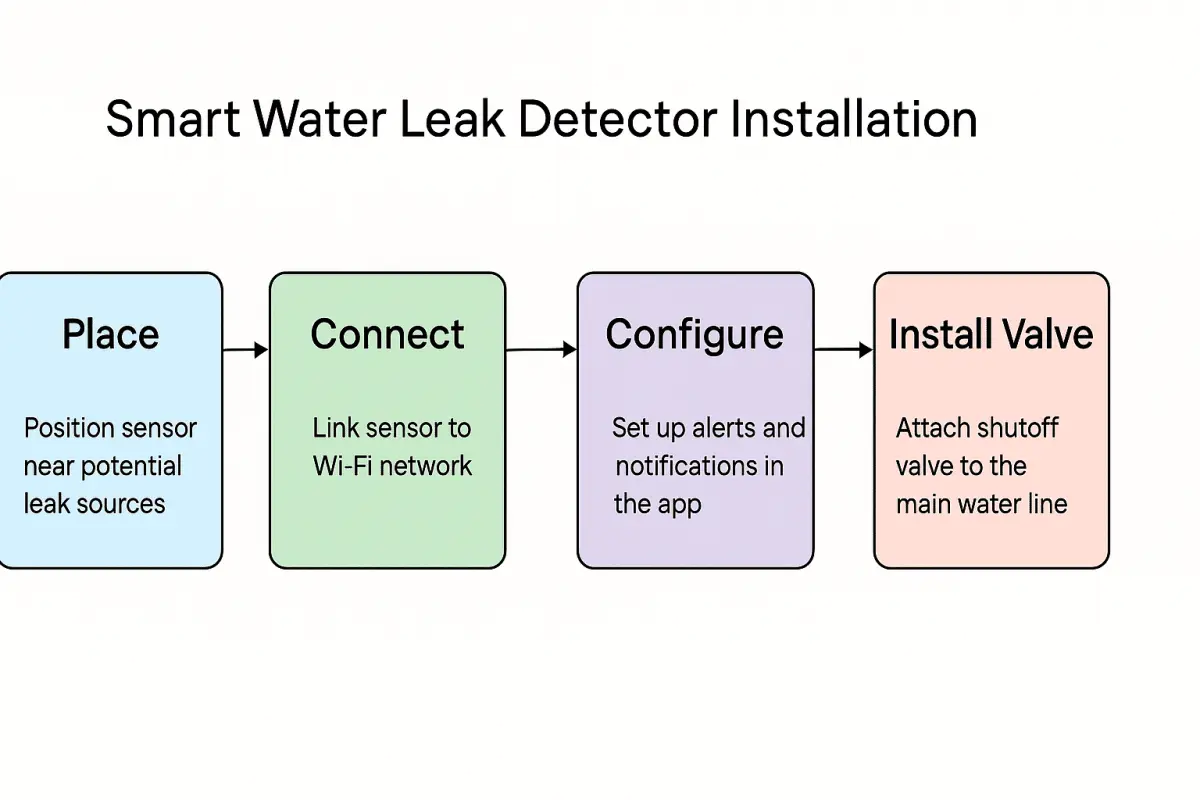
Installing a smart leak sensor isn’t rocket science—most can be set up in under 10 minutes. Here's how you can do it yourself:
🛠️ A. Water Leak Sensor (AquaNet-LD) Installation
Tools Needed: None (battery-powered)
- Choose Your Location:
Place the sensor near water sources—under the sink, behind the toilet, beside the water heater. - Avoid These Mistakes:
- Don’t block airflow; leave room around the sensor.
- Avoid metallic surfaces that might interfere with WiFi.
- Activate the Device:
- Insert batteries and press the power/test button.
- Follow app instructions to connect to WiFi and pair with the Grus Home app.
Tip: Most sensors emit a beep when they detect moisture. You can test using a wet towel.
🧰 B. Smart Shutoff Valve (AquaNet-VM) Installation
Tools Needed: Adjustable wrench, Teflon tape
Installation Time: ~30–45 minutes
- Shut Off Your Water Supply
- Locate your main water valve and shut off the flow before starting.
- Install Inline with Main Pipe
- Replace a section of the pipe near the valve with the smart valve body.
- Use Teflon tape to ensure a leak-proof seal.
- Connect to Power and App
- Plug the valve controller into an outlet.
- Pair it using the Grus app’s on-screen instructions.
- Test the Shutoff Function
- Trigger the valve remotely or with an attached sensor to simulate a leak.
5. Grus Smart Water Protection: Real-World Applications
Whether you’re living in a high-rise condo or managing a multi-floor home, Grus smart leak detectors adapt easily to your needs.
🏠
Scenario 1: Kitchen Disaster Prevention
- Problem: Dishwasher hose cracked and began leaking slowly over time.
- Solution: AquaNet-LD detected the moisture and triggered AquaNet-WV to shut off the water immediately.
- Result: $0 in damage and no disruption to daily life.
🧺
Scenario 2: Laundry Room Flood Avoidance
- Problem: Old washing machine overflowed while unattended.
- Solution: Sensor under the machine detected water within 3 seconds.
- Result: Notification sent via app; user shut off valve remotely while away.
“We’ve had it for 4 months, and it already saved us from a $3,000 cleanup!” — Jennifer R., California
6. Integration Tips: Smart Home Compatibility
Grus devices are designed to fit into your existing smart home ecosystem:
| Platform | Compatibility |
|---|---|
| Google Assistant | ✅ Voice Control |
| Amazon Alexa | ✅ Routine Setup |
| SmartThings | ✅ Custom Scenes |
| Apple HomeKit | 🔜 Coming Soon |
You can automate routines like:
- If leak detected → Shut off water + Send SMS + Flash hallway lights
- Voice command: “Alexa, check for water leaks”
7. How to Choose the Best Leak Detector for Your Home
A. Choose Based on Use Case
| Use Case | Recommended Device | Key Features |
|---|---|---|
| Kitchen/Bathroom | AquaNet-M | Compact, easy placement, WiFi support |
| Water Heater / Laundry Room | AquaNet-LD + AquaNet-VM | Auto shutoff with high sensitivity |
| Whole Home Protection | AquaNet-M (multi-pack) + AquaNet-BD | Multi-zone alerts + auto shutdown |
| Vacation Home | AquaNet-BD + Mobile Alerts | Remote management, no monthly fee |
B. Prioritize These Features in 2025
- ✅ Real-Time WiFi Alerts (not just sound-based)
- ✅ Integration with Alexa, Google, SmartThings
- ✅ Battery backup
- ✅ Auto Shutoff Capabilities
- ✅ Durability for wet/humid environments
Don’t fall for cheap sensors that only beep locally—what if you’re not home?
8. How Much Does It Cost?
| Feature | Budget Options ($10–30) | Mid-Range ($40–100) | Grus Premium ($60–150) |
|---|---|---|---|
| Local Alarm Only | ✅ | ✅ | ✅ |
| WiFi Notifications | ❌ | ✅ | ✅ |
| Auto Water Shutoff | ❌ | Some Models | ✅ |
| App Integration | ❌ | Partial | ✅ |
| Multi-device Synchronization | ❌ | ❌ | ✅ |
| Works with Smart Home Ecosystem | ❌ | Some | ✅ |
9. Final Thoughts: Don’t Wait for a Disaster
According to the Insurance Information Institute, water damage is among the most common and costly claims, averaging over $11,000 per incident. Preventive protection is no longer optional—it’s smart, proactive homeownership.
If you’ve ever dealt with a burst pipe, leaking washer, or a forgotten faucet—you know peace of mind is priceless.
Ready to Protect Your Home?
Grus.io offers a complete smart water protection system trusted by thousands of homeowners.
🛒 Featured Product:
AquaNet-LD Leak Detector
AquaNet-VM Automatic Water Shutoff Valve
- Real-time alerts
- App control
- Easy installation
- Seamless integration with Alexa and Google Home
Don’t wait for your floors to flood. The best time to install a smart leak detector was yesterday—the second-best time is now.
Comments
Post a Comment