A guide to the science behind gas detection — and the safety technology that protects your home.
A Hidden Threat You Can’t See or Smell
A gas leak is one of those dangers that’s invisible until it’s almost too late.
Natural gas is odorless by nature, and although suppliers add a sulfur-like scent so you can smell it, most leaks start too small for human senses to notice. A simple spark — from a switch, a stove, or even static — can trigger disaster.
That’s why gas leak alarms exist. They quietly monitor the air every second, detecting combustible gases before they reach dangerous levels. But many people still wonder: How do these devices actually work?
Let’s take a closer look at the technology, logic, and smart systems that make modern gas detection possible.
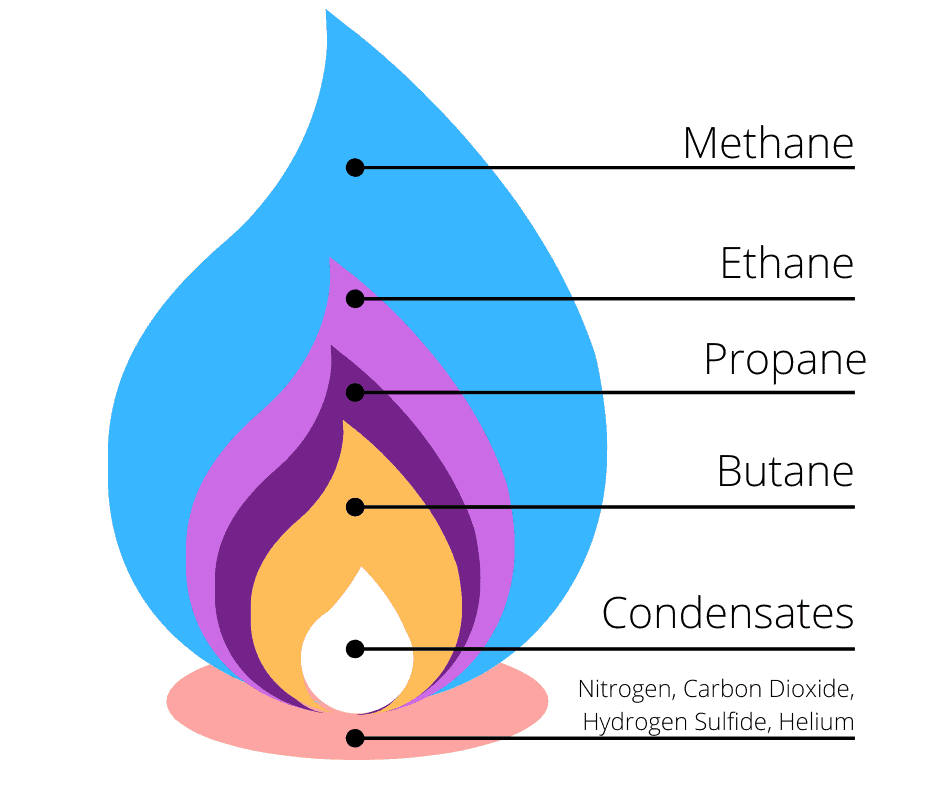
Understanding Gas Leak Alarms — What Do They Actually Detect?
A gas leak detector is not the same as a carbon monoxide (CO) alarm.
CO alarms sense toxic gases, while gas leak detectors identify flammable gases like methane (natural gas), propane, or butane that can cause explosions.
Types of Gas Detectors
- Natural Gas (Methane) Detectors – Installed near ceilings because methane rises.
- Propane or LPG Detectors – Placed near the floor, since propane is heavier than air.
- Multi-Gas Detectors – Combine sensors for both combustible and toxic gases.
Each type plays a role in a broader natural gas alarm system, often linked to shutoff valves or ventilation fans.
Inside the Technology — How Gas Leak Alarms Work
When you plug in a gas leak alarm, it quietly starts doing one thing — sniffing the air.
But what happens inside that small device?
At its core, most home gas alarms use semiconductor sensors — tiny electronic chips that react to gas in the air by changing their electrical signal. This process is the heart of the gas detector working principle: when gas is present, the sensor’s electrical resistance shifts, and the alarm reacts if it crosses a danger level.
These semiconductor sensors are typically made from tin dioxide (SnO₂). In normal air, oxygen molecules attach to the sensor’s surface, capturing electrons and keeping resistance high. When gases like methane or propane enter, they react with those oxygen ions, releasing the electrons and lowering resistance.
That change is instantly measured. Once it passes a preset limit—usually about 10% of the gas’s lower explosive limit (LEL)—the microcontroller triggers the alarm.
The Sequence of Safety
- Gas enters the sensor chamber.
- The detection chip registers resistance changes.
- The circuit processes the signal.
- The alarm beeps (85 dB) and flashes.
- If it’s WiFi-connected, a push alert goes to your phone.
That’s how gas leak alarms work — by translating chemical reactions in the air into instant electronic warnings.
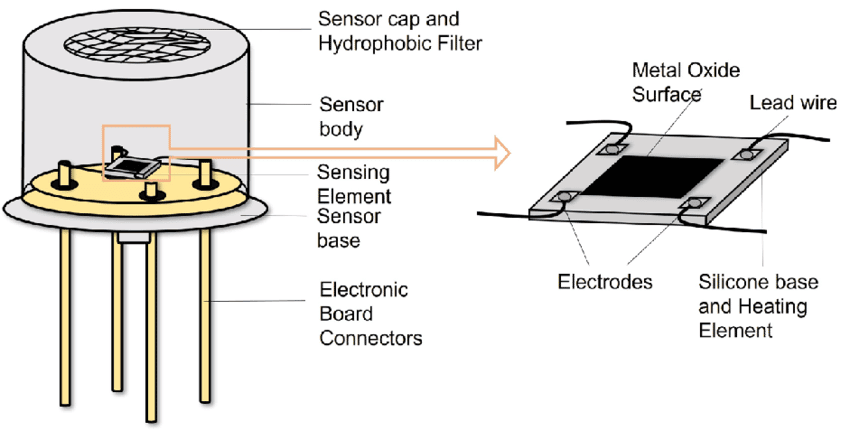
Combustible Gas Sensor Types Explained
Not all detectors sense gas the same way. Here’s how different sensor technologies compare:
1. Semiconductor (SnO₂) Sensors — Reliable and Affordable
- Principle: Tiny chips detect resistance changes caused by gas exposure.
- Pros: Fast response, compact, low cost.
- Cons: Sensitive to humidity, gradual drift over time.
- Best for: Home kitchens, apartments, rental units.
Think of them as the “smoke alarm equivalent” for gas — compact, inexpensive, and always on guard.
2. Catalytic Combustion Sensors — Industrial Strength
- Principle: Gas burns on a catalyst bead, producing heat that changes resistance.
- Pros: Very accurate at high gas levels.
- Cons: Needs oxygen; higher energy use.
- Best for: Commercial kitchens or factories.
3. Infrared (IR) Sensors — Precise but Pricey
- Principle: Measures how gas absorbs infrared light.
- Pros: Immune to poisoning, long lifespan.
- Cons: Expensive; larger modules.
- Best for: Industrial or lab environments.
| Sensor Type | Detection Method | Sensitivity | Cost | Use Case |
|---|---|---|---|---|
| Semiconductor | Resistance change | High | Low | Home alarms |
| Catalytic bead | Combustion heat | Medium | Medium | Industrial |
| Infrared (IR) | Light absorption | Very high | High | Commercial |
What Happens When a Leak Is Detected
When gas levels rise above the preset limit, the alarm’s internal chip immediately triggers an alert:
- Trigger: Sensor output crosses threshold.
- Audible alert: 85+ dB buzzer and flashing light.
- Smart alert: WiFi versions send notifications via app.
- Automation: Linked systems activate a shutoff valve or fan.
💡 Pro Tip: Pair your alarm with a Smart Gas Shutoff Valve — it can automatically stop gas flow the moment a leak is detected.
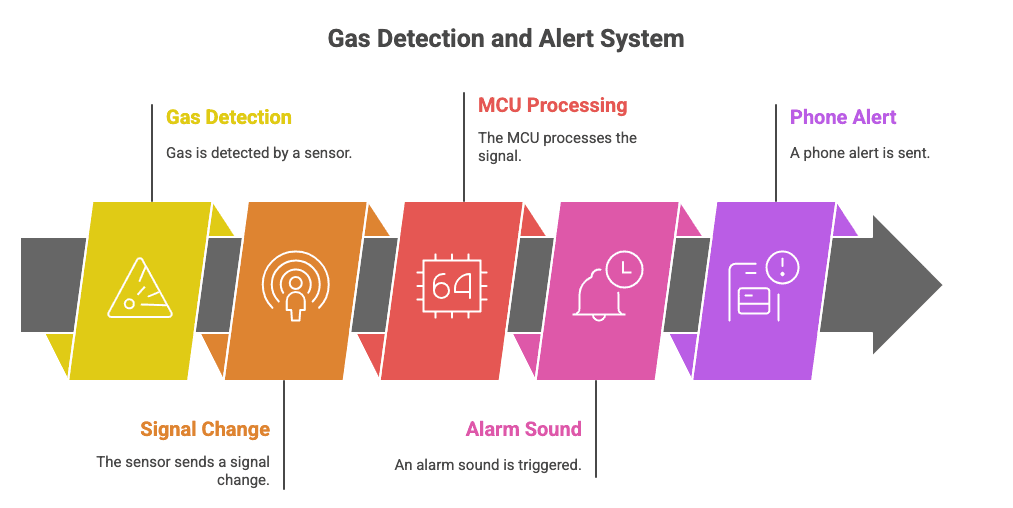
Smart WiFi Integration — Safety That Travels With You
Traditional detectors just make noise.
Smart WiFi alarms go further — they message you instantly, log data, and connect with other smart devices like exhaust fans or voice assistants.
That’s how a natural gas alarm system becomes a real safety network.
Installation Tips — How Does a Gas Leak Detector Work in Your Home?
- Methane / Natural gas: Mount near the ceiling (12–24 in below).
- Propane / LPG: Near the floor (within 12 in above).
Avoid windows, vents, or stoves.
Test monthly and replace after 5–7 years for best accuracy.
Why Every Home Needs a Gas Leak Alarm
You wouldn’t wait for a fire to buy a smoke alarm — don’t wait for a gas incident to install a gas detector.
Even a small leak can lead to fatigue, dizziness, or explosions.
A smart gas leak detector provides early warning and remote control — giving you safety, even when you’re not home.
Learn more about the Smart Gas Protection System — a complete setup combining leak detection, CO alarms, and automatic shutoff valves.
Explore Smart Gas Safety Solutions →FAQ — Clear Answers from Experts
Q1: How does a gas leak alarm detect combustible gas?
It uses a tiny semiconductor sensor chip that reacts when gases like methane or propane contact its surface. The chip’s electrical signal changes as gas concentration rises, and the circuit sounds the alarm once the level exceeds a safe threshold.
Q2: What gases can a home detector identify?
Most detect flammable gases — methane (natural gas), propane, and butane. Some models also detect hydrogen. For toxic gases like carbon monoxide, use a dedicated CO alarm such as the GasNet-CM.
Q3: How accurate are these detectors?
Modern semiconductor sensors detect as little as 200–500 ppm of gas and react within seconds. Accuracy can decline after 5–7 years, so regular replacement is essential.
Q4: Where should I install one?
Mount natural gas detectors near the ceiling, and propane detectors near the floor. Avoid vents or heat sources for accurate readings.
Q5: What should I do if gas detector alarms?
Turn off open flames, avoid electrical switches, ventilate immediately, evacuate, and call your gas utility or fire department once outside.
Summary
Gas leak alarms use small semiconductor sensors—essentially chemical-reactive chips—to turn invisible danger into early warning.
Linked through WiFi and smart valves, they form a modern home safety system that protects you long before you can smell trouble.
Comments
Post a Comment