The first real cold snap of winter always comes quietly. One morning, you wake up and can see your breath before you even reach the thermostat. You bump it up a few degrees, make coffee, and tell yourself, “Well, it’s going to be a long few months.”
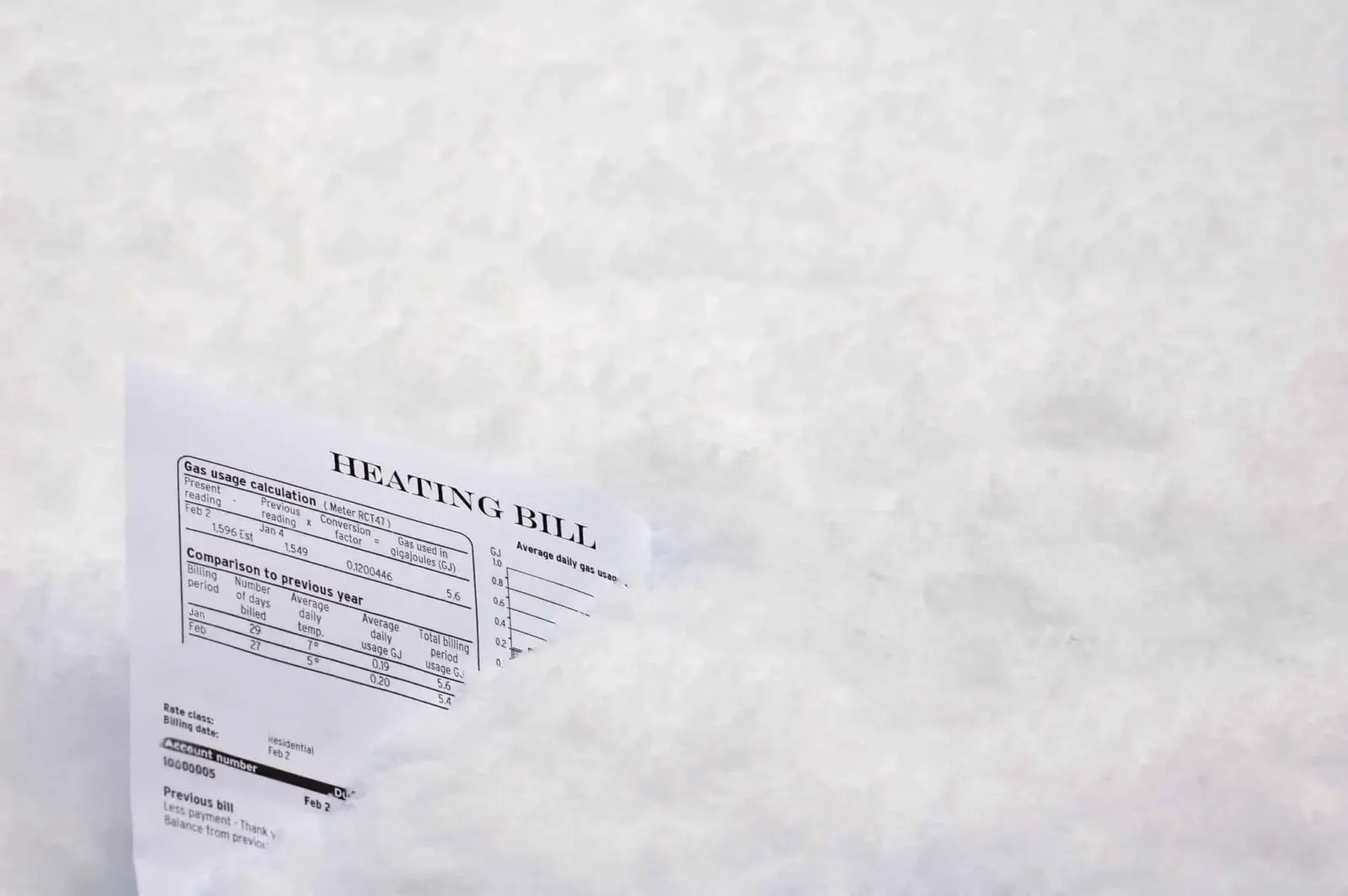
Then January’s bill arrives — and suddenly, the long winter feels even longer.
If your electric bill always jumps in winter, you’re not imagining it. Across much of the U.S. and Canada, homeowners face the same problem: heating costs that spike sharply, even when nothing about your routine seems to change.
But the reasons aren’t as simple as “it’s cold outside.” They lie in how your home uses electricity, how your heating responds to that cold, and how little control most people actually have over either one.
1. The Real Reason Winter Bills Skyrocket
Let’s start with the basics: heating is expensive because it uses electricity at full power for long periods of time.
The U.S. Energy Information Administration (EIA) estimates that heating accounts for 40–50% of home energy use in winter months — and for homes using electric baseboard systems, that share can be even higher.
Unlike a gas furnace that burns in short bursts, or a heat pump that can modulate its output, electric baseboard heaters are simple resistance devices. They’re either on or off — and when they’re on, they’re drawing maximum current.
The colder the air outside, the longer they stay on. In older or less insulated homes, that can mean hours of near-continuous operation. And because most utility companies bill electricity on a time-of-use or tiered rate structure, those extra kilowatt-hours cost more during peak demand hours.
In Ontario, for example, electricity prices rise significantly in the winter evenings, just when most people are home, cooking, and turning up the heat. In the U.S. Northeast — Maine, Vermont, Michigan — many homeowners see their bills double between November and February, even if their daily habits barely change.
It’s not that the electricity itself suddenly costs twice as much; it’s that your heating system is consuming twice the energy without you realizing it.
2. Hidden Energy Waste in Everyday Heating
Here’s the tricky part: most of that wasted energy is invisible.
If you use electric baseboard heaters, you’ve probably noticed they’re quiet — almost too quiet. There’s no fan noise, no hum, just steady warmth. But that silence can be deceiving. Once the thermostat calls for heat, those heaters stay on until they overshoot the set temperature, then shut off completely. When the air cools, they start the process again.
Older thermostats — especially the round mechanical ones or early programmable models — have no awareness of occupancy or real-time conditions. You might set them to lower temperatures when you’re out, but life doesn’t always follow the schedule.
Stay home sick one day? Your house will still cool off because the program doesn’t know. Go away for a weekend? The heaters might keep running at full temperature because you forgot to change the setting.
Even the most diligent homeowners can’t keep up with the micro-adjustments that make heating efficient.
And without energy monitoring, you don’t see any of this happening — until the bill lands in your inbox.
3. The Moment of Discovery
A homeowner in Ottawa once shared this story online:
“I installed an energy monitor because I couldn’t figure out why my bills were so high.
Turns out, the baseboard in our guest room was running almost all day, even though that room was empty. The thermostat was just off by a few degrees, but it kept calling for heat nonstop.”
That single discovery cut about 15% off their next bill — not through some magic new system, but simply by knowing what was happening.
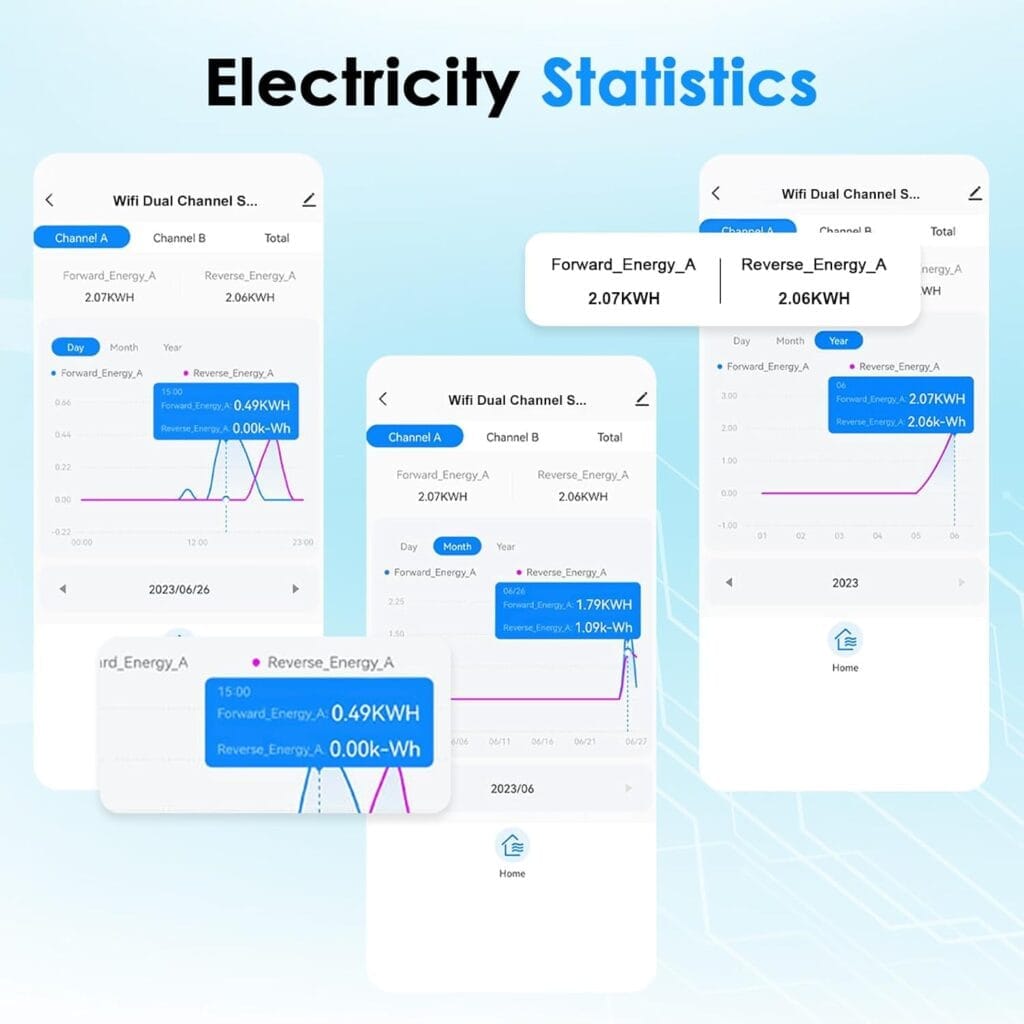
That’s the power of energy monitoring. It turns invisible behavior into visible data. You start seeing which rooms or circuits use the most power, how often your heaters run, and whether the spikes line up with your actual use.
It’s like turning the lights on in a dark room. Once you can see what’s going on, you start making smarter choices almost automatically.
4. Smarter Tools for a Smarter Winter
The next step after awareness is automation — letting technology help manage what humans can’t do manually every day.
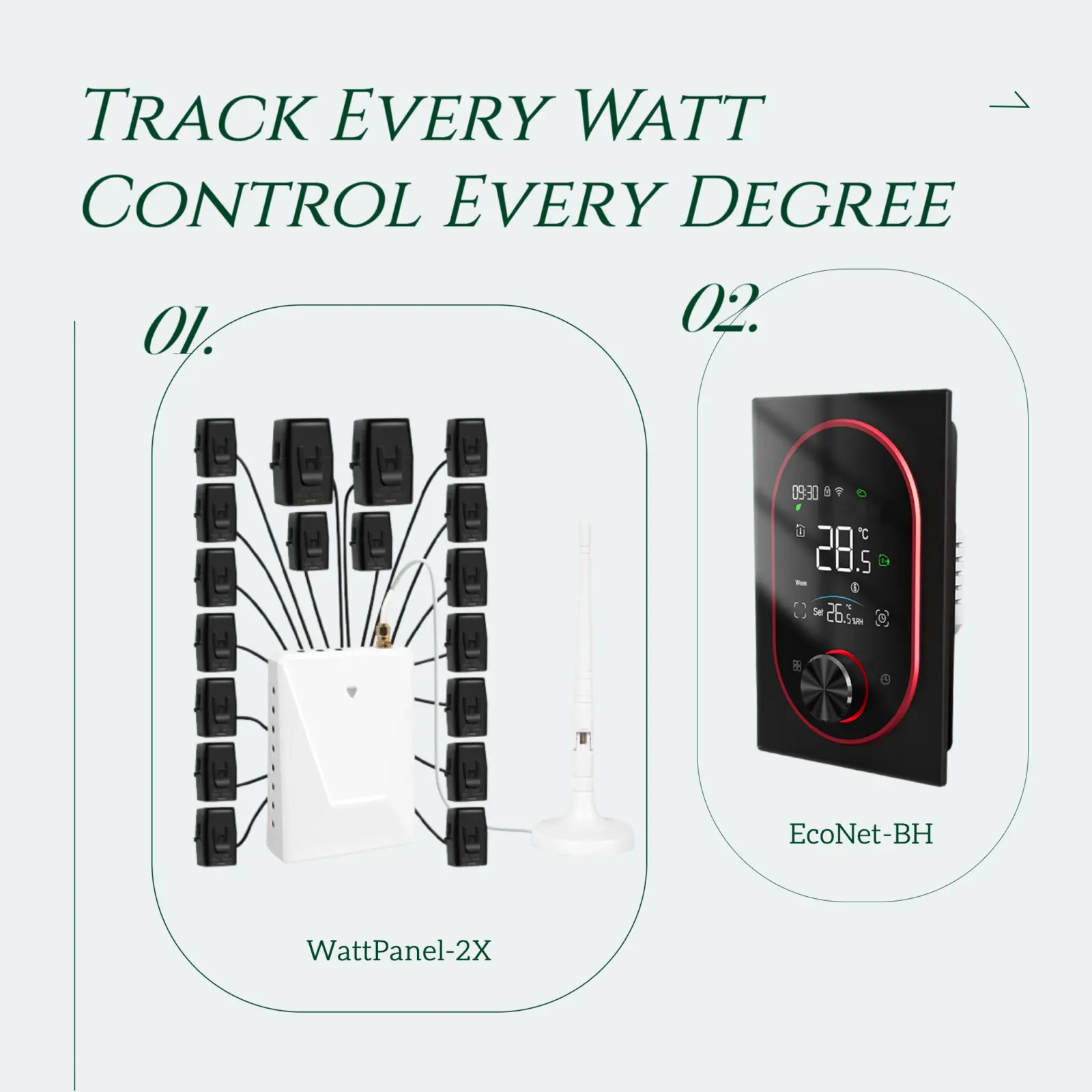
If your home uses baseboard or electric radiant heating, a smart thermostat built for line-voltage systems (like the EcoNet-BH Smart Baseboard Heater Thermostat) gives you that missing layer of intelligence.
It connects to Wi-Fi, syncs with your phone, and learns your habits over time. Instead of fixed programs, it adjusts automatically — lowering the temperature when you leave, warming up the house just before you return, and avoiding the “overheat and cool down” cycles that waste energy.
Now pair that with a circuit-level monitor, such as the WattPanel-2X Energy Monitor, and you can watch your home’s energy behavior in real time.
You’ll see when each heater turns on, how much it draws, and how your overall consumption changes hour by hour.
Together, they create a feedback loop: the monitor shows you what’s happening, and the thermostat acts on it intelligently. That’s what smart thermostat heating efficiency really means — not just comfort, but awareness and precision.
And once you have that insight, it’s easier to spot other opportunities to save on heating bills — sealing drafts, adjusting night temperatures, or shifting high-draw appliances out of peak hours.
If you want both visibility and control in one step, the WattPanel-2X + EcoNet-BH smart heating bundle puts monitoring and automation under the same roof.
5. Small Changes, Big Relief
For most people, improving winter efficiency doesn’t mean rebuilding their heating system. It’s about fixing the blind spots.
Start by checking your electric panel. Do you know which breakers feed which rooms?
A simple monitor like the WattPanel-2X can map that automatically, showing which circuits spike at night or stay active while you’re away.
Next, look at your thermostats. Are they programmable? Are they even accurate? A small calibration issue — just two degrees off — can translate into 10% more usage over the season.
Then, if your baseboards or radiant heaters are still controlled by old dials, consider upgrading to a smart model. The difference isn’t just convenience; it’s precision. These thermostats measure temperature more accurately, react faster to changes, and prevent those long overshoot cycles that quietly drain your wallet.
You don’t need to chase perfect efficiency — just better awareness. Every bit of control you gain reduces that helpless feeling when the winter bill arrives.
6. Take Control Before the Next Cold Snap
If your electricity bill already climbed this month, it’s not too late to make a change.
Visibility and small upgrades can save you real money — and a lot of frustration — before the snow even melts.
Start by tracking where your power goes.
Then, let smart technology handle the rest.
👉 Explore the WattPanel-2X Energy Monitor to understand your home’s real power usage, and the EcoNet-BH Smart Baseboard Heater Thermostat to make every watt count.
Together, they form a simple home energy system that helps you keep your home warm — without letting your bills freeze you out.
If you’re trying to map the problem before buying hardware, start with our Smart Heating & Energy Monitoring Solution—it explains how visibility and control work together across different home.
FAQ
Why does my electric bill go up so much in winter?
Because heating dominates winter energy use. Electric heaters often run at full power for long hours when outdoor temperatures drop, and time-of-use rates make each kilowatt-hour more expensive during peak times.
How can I tell what’s using the most electricity at home?
Start by watching patterns — which rooms stay warm longest, which appliances run continuously. Simple energy-monitoring tools or your utility’s usage dashboard can help you see where power goes. But utility’s usage dashboard only shows total household consumption. To see which rooms or circuits draw the most power, you need circuit-level energy monitoring—that’s what reveals which heaters or appliances quietly drive up your bill.
What are practical ways to lower winter electricity costs?
Seal drafts, lower the thermostat slightly, and reduce heating in unused rooms. Keep steady schedules and avoid frequent temperature swings—small changes can noticeably save on heating bills.
Are all thermostats equally efficient for electric heating?
No. Outdated line-voltage thermostats often overshoot the set temperature, wasting energy. More accurate and responsive controls improve heating efficiency and comfort.
Final Thought
You don’t have to live with a surprise every January.
Most of what drives a high electric bill in winter isn’t mysterious — it’s just hidden.
Once you can see where the energy goes, and control it intelligently, the numbers start to make sense again.
This winter, stay warm — and stay in charge.
Comments
Post a Comment